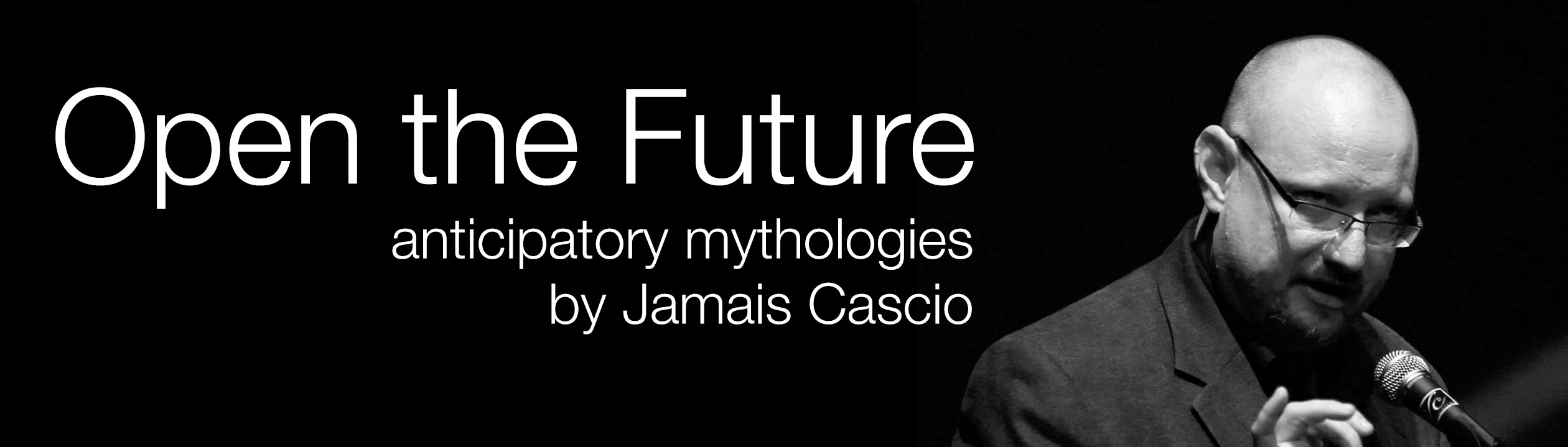

We create myths to make sense of the deep structure of the world.
Foresight scenarios are myths to explain the deep structure of the coming world emerging from the present. We evoke this mythology every time we use the incantation that begins so many written scenarios:
This is a world in which...
Start Here
Here are some of the pieces I've written over the years that best illustrate what I'm thinking about.
Core Concepts
Foresight
Ideas
- The Griefer Future
- The Participatory Decepticon
- Fifteen Minutes into the Future
- Misinformation, Identity, and Power in the Internet Age
- An Eschatological Taxonomy
The Earth's Environment
- A Survival Guide to Geoengineering
- Resilience and the Next Disaster
- How Many Earths?
- Feedback, Tipping Points, and Hard Choices
- The Earth Will Be Just Fine, Thank You
- The Cheeseburger Footprint
Politics
- Three Possible Economic Models, Part I (and Part II)
- The "End of Politics" Delusion
- Super-Empowered Hopeful Individuals
- A Post-Hegemonic Future
Transformative Futures
- Your Posthumanism is Boring Me
- Get Smarter
- Flunking Out
- Singularities Enough, and Time
- Pondering Fermi
- Life and Love in the Uncanny Valley
What People Say
"When Jamais Cascio speaks, I listen. When he surprises me, I take notes."
- Bruce Sterling, Author, Designer, Visionary in Residence Art Center College of Design
"Jamais' talk was a landmark in our event series. It was absolutely riveting for the audience, who (me included) were literally on the edge of their seats, and a lot of people watched the videos afterwards and talked about the climate issues and big risks that he discussed. It was entertaining, funny, intellectually challenging and flat out terrifying by turns. You could not ask for a better guide to the future's outer reaches."
- Vinay Gupta, Founder of the Hexayurt Project and curator of the "Truth and Beauty" lecture series in London.
"Jamais was an outstanding speaker to kick off our new Ensia LIVE series in Minneapolis, playing to a packed house. He was the perfect speaker -- thought-provoking, engaging, funny and articulate. The audience left the presentation feeling challenged, inspired, and amazed."
- Dr. Jonathan Foley, Executive Director California Academy of Sciences, Former Director Institute on the Environment (IonE), University of Minnesota
"Jamais Cascio's deep voice resonates through a room and penetrates deeply. He speaks with power, yet communicates with humility and self-effacing humor. His foresight is profoundly provocative in ways that spark new insight and new actions for those who engage with him."
- Bob Johansen, Distinguished Fellow, Institute for the Future and Author, Leaders Make the Future
"Jamais Cascio is a magician. Out of his imagination, research, and ruthless curiosity, he conjures visions that have never before existed. He then presents them in stirring ways to audiences that he leaves dazzled. They leave never again thinking as they did before he walked in. He's the best."
- Joel Garreau, Lincoln Professor of Law, Culture and Values, Arizona State University, Author, Radical Evolution: The Promise and Peril of Enhancing Our Minds, Our Bodies - And What It Means to Be Human.
"Jamais is a brilliant and engaging speaker, and his involvement in my Future of Work series was one of the high points of a great project. He has a mordant sense of humor, a broad understanding of the challenges of foresight, and the ability to tie societal disruption to the human condition."
- Stowe Boyd, Web Anthropologist, Research Lead Gigaom.com
"For topics ranging from climate and energy to information systems and human augmentations, Jamais has been my go-to thought partner and presenter for our annual Ten-Year Forecast. He has that uncommon ability to match sobering news with humor, frightening futures with optimism and pragmatism. He can think on his feet whether he's delivering trenchant insights or poking fun at the limits of our human minds. I always count on Jamais to make surprising connections and tease out the unexpected.
- Kathi Vian, Distinguished Fellow and Director of the Ten-Year Forecast Program, Institute for the Future
"... our moral guide to the future"
-Foreign Policy magazine
Books

Science, Conservation, and National Parks (contributor)
"... the most subtle analysis so far on the subject."
-- Foreign Policy (Dec 2009)
"Some of the most thoughtful work on the topic of climate change..."
-- The Futurist (July/Aug 2009)
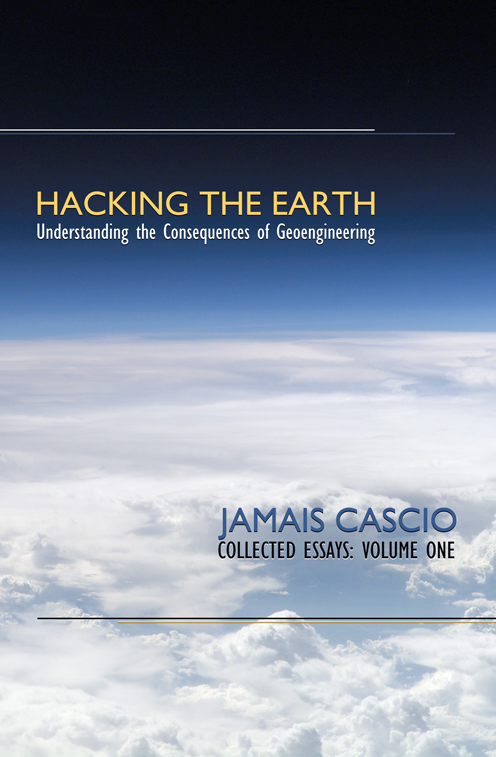
What do we do if our best efforts to limit the emission of greenhouse gases into the atmosphere fall short? According to a growing number of
environmental scientists, we may be forced to try an experiment in global climate management: geoengineering.
Geoengineering would be risky, likely to provoke international tension, and certain to
have unexpected consequences. It may also be inevitable.
Environmental futurist Jamais Cascio explores the implications of geoengineering in
this collection of thought-provoking essays. Is our civilization ready
to take on the task of re-engineering the planet?
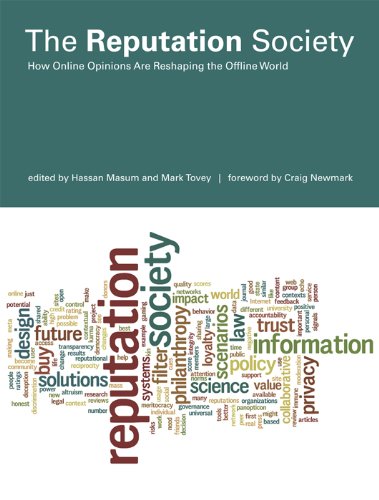
The Reputation Society: How Online Opinions Are Reshaping the Offline World (contributor)

Worldchanging: A User's Guide for the 21st Century (contributor)

Transhuman Space: Broken Dreams

Interviews and Talks
"Privacy, Geoengineering, Transhumanism And More"
U Cast Studios Interview, December 2019
"20 Minutes into the Future" talk at Arab Media Forum 2019
Fringe.FM Interview, June 2018
Deliberate Conversations, Boulder Ch. 8 TV. Recorded April 2016
Longevity & the Future of Fun with Jamais Cascio from Adam A. Ford on Vimeo.
Jamais Cascio - An Optimists Guide to the Next 10 Years from Adam A. Ford on Vimeo.
Closing Keynote for World Bank Understanding Risk 2016 conference (warning, low audio quality)
TED talk, 2007
TEDx Marin talk, 2013
(video) July 2014
The Problems with Prediction interview with RJ Eskow.
(audio) April 2014
Everything Will Be Alright* interview for documentary series.
(video) February 2014
Crime and Punishment discussion at Fast Company's Innovation Uncensored
(video) April 2013
Bots, Bacteria, and Carbon talk at the University of Minnesota
(video) March 2013
Visions of a Sustainable Future interview
(text) March 2013
Talking about apocalypse gets dull...all apocalypses are the same, but all successful scenarios are different in their own way.
The Future and You! interview
(video) December 2012
Bad Futurism talk in San Francisco
(video) December 2012
Inc. magazine interview
(text) December 2012
Any real breakthrough in AI is going to come from gaming.
Singularity 1 on 1 interview
(video) November 2012
Momentum Interview
(text) September 2012
One hope for the future: That we get it right.
Doomsday talk in San Francisco
(video) June 2012
Polluting the Data Stream talk in San Francisco
(video) April 2012
Peak Humanity talk at BIL2012 in Long Beach
(video) February 2012
Acceler8or Interview
(text) January 2012
Our tools don't make us who we are. We make tools because of who we are.
Hacking the Earth talk in London
(video) November 2011
Cosmoetica Interview
(text) May 2011
The fears over eugenics come from fears over the abuse of power. And we have seen, time and again, century after century, that such fears are well-placed.
Future of Facebook project interviews
(video) April 2011
Geoengineering and the Future interview for Hearsay Culture
(audio) March 2011
Los Angeles and the Green Future interview for VPRO Backlight
(video) November 2010
Surviving the Future excerpts on CBC
(video) October 2010
Future of Media interview for BNN
(video) September 2010
Hacking the Earth Without Voiding the Warranty talk at NEXT 2010
(video) September 2010
Map of the Future 2010 at Futuro e Sostanabilita 2010 (Part 2, Part 3)
(video) July 2010
We++ talk at Guardian Activate 2010
(video) July 2010
Wired for Anticipation talk at Lift 10
(video) May 2010
Soylent Twitter talk at Social Business Edge 2010
(video) April 2010
Hacking the Earth without Voiding the Warranty talk at State of Green Business Forum 2010
(video) February 2010
Manipulating the Climate interview on "Living on Earth" (public radio)
(audio) January 2010
Bloggingheads.TV interview
(video) January 2010
Homesteading the Uncanny Valley talk at the Biopolitics of Popular Culture conference
(audio) December 2009
Sixth Sense interview for NPR On the Media
(audio) November 2009
If I Can't Dance, I Don't Want to be Part of Your Singularity talk for New York Future Salon
(video) October 2009
Future of Money interview for /Message
(video) October 2009
Cognitive Drugs interview for "Q" on CBC radio
(audio) September 2009
How the World Could (Almost) End interview for Slate
(video) July 2009
Geoengineering interview for Kathleen Dunn Show, Wisconsin Public Radio
(audio) July 2009
Augmented Reality interview at Tactical Transparency podcast
(audio) July 2009
ReMaking Tomorrow talk at Amplify09
(video) June 2009
Mobile Intelligence talk for Mobile Monday
(video) June 2009
Amplify09 Pre-Event Interview for Amplify09 Podcast
(audio) May 2009
How to Prepare for the Unexpected Interview for New Hampshire Public Radio
(audio) April 2009
Cascio's Laws of Robotics presentation for Bay Area AI Meet-Up
(video) March 2009
How We Relate to Robots Interview for CBC "Spark"
(audio) March 2009
Looking Forward Interview for National Public Radio
(audio) March 2009
Future: To Go talk for Art Center Summit
(video) February 2009
Brains, Bots, Bodies, and Bugs Closing Keynote at Singularity Summit Emerging Technologies Workshop (video) November 2008
Building Civilizational Resilience Talk at Global Catastrophic Risks conference
(video) November 2008
Future of Education Talk at Moodle Moot
(video) June 2008
G-Think Interview
(text) May 2008
"In the best scenario, the next ten years for green is the story of its disappearance."
A Greener Tomorrow talk at Bay Area Futures Salon
(video) April 2008
Geoengineering Offensive and Defensive interview, Changesurfer Radio
(audio) March 2008
Wired interview
(text) March 2008
"The road to hell is paved with short-term distractions. "
The Future Is Now interview, "Ryan is Hungry"
(video) March 2008
G'Day World interview
(audio) March 2008
UK Education Drivers commentary
(video) February 2008
Futurism and its Discontents presentation at UC Berkeley School of Information
(audio) February 2008
Opportunity Green talk at Opportunity Green conference
(video) January 2008
Metaverse: Your Life, Live and in 3D talk
(video) December 2007
Singularity Summit Talk
(audio) September 2007
Political Relationships and Technological Futures interview
(video) September 2007
NPR interview
(audio) September 2007
"Science Fiction is a really nice way of uncovering the tacit desires for tomorrow...."
Spark Radio, CBC interview
(audio) August 2007
Spark Radio, part 2 CBC interview
(audio) August 2007
True Mutations Live! roundtable Part 1
(audio) July 2007
True Mutations Live! roundtable Part 2
(audio) July 2007
G'Day World interview
(audio) June 2007
NeoFiles interview
(audio) June 2007
Take-Away Festival talk
(video) May 2007
NeoFiles interview
(audio) May 2007
Changesurfer Radio interview
(audio) April 2007
NeoFiles interview
(audio) July 2006
FutureGrinder: Participatory Panopticon interview
(audio) March 2006
TED 2006 talk
(video) February 2006
Commonwealth Club roundtable on blogging
(audio) February 2006
Personal Memory Assistants Accelerating Change 2005 talk
(audio) October 2005
Participatory Panopticon MeshForum 2005 talk
(audio) May 2005
Jamais Cascio

Photo by Jamais Cascio
Sarajevo March 2016
Essays and Observations
Participatory Panopticon: 2019
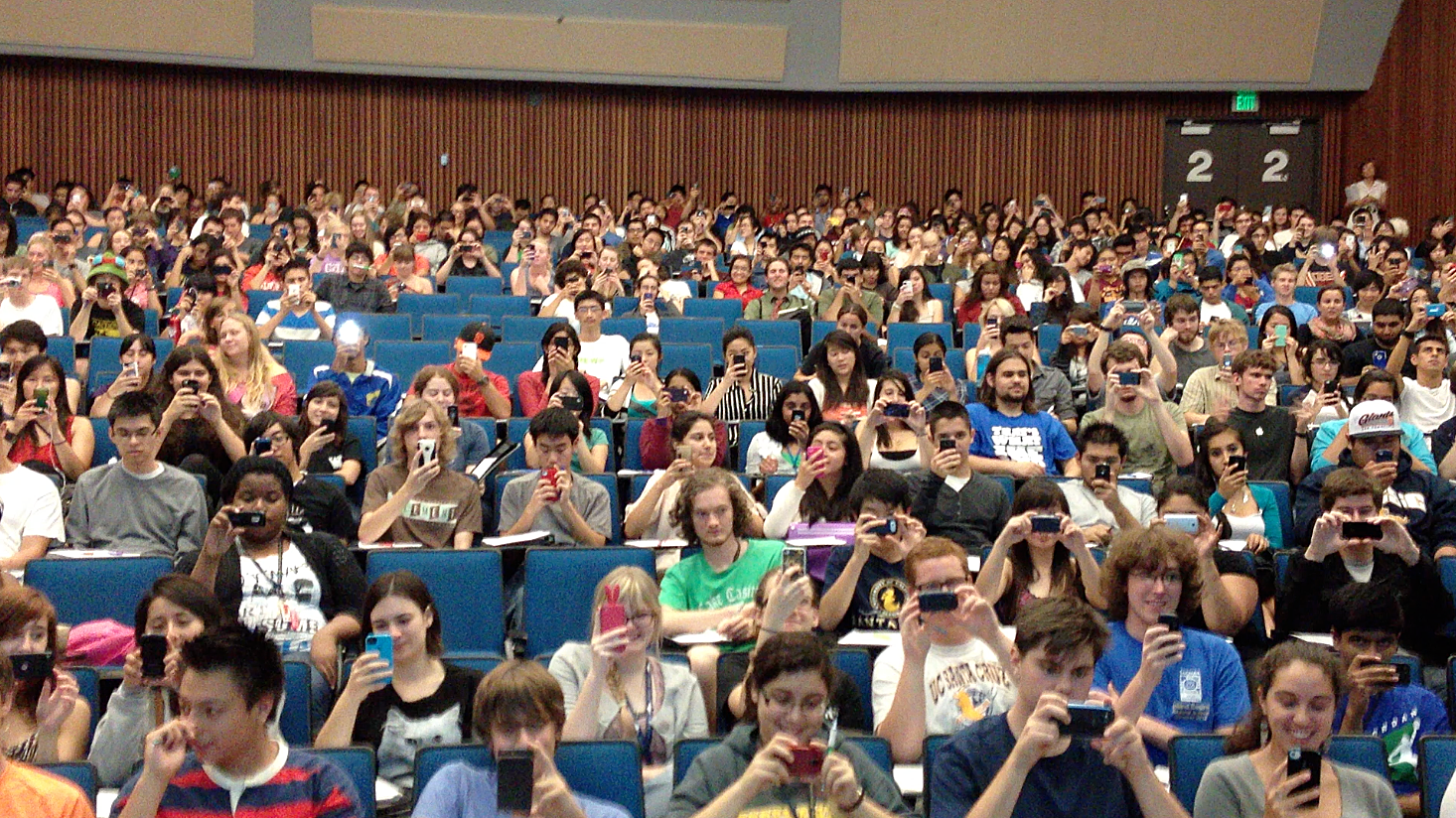
In April of 2004--just a bit over 15 years ago--I posted this question to Worldchanging:
"What happens when you combine mobile communications, always-on cameras, and commonplace wireless networks?" I called the answer the Participatory Panopticon.
Remember: at that point in time, Blackberry messaging was the height of mobile communication, cameras in phones were rare and of extremely poor quality, and EDGE was the most common form of wireless data network. Few people had truly considered what the world might look like as all of these systems continued to advance.
The core of the Participatory Panopticon concept was that functionally ubiquitous personal cameras with constant network connections would transform much of how we live, from law enforcement to politics to interpersonal relationships. We'd be able to--even expected to--document everything around us. No longer could we assume that a quiet comment or private conversation would forever remain quiet or private.
The Participatory Panopticon didn't simply describe a jump in technology, it envisioned the myriad ways in which our culture and relationships would change in the advent of a world of unrelenting peer-to-peer observation.
Here's the canonical version of the original argument: the text of the talk I gave at Meshforum in 2005. It's long, but it really captures what I was thinking about at the time. As with any kind of old forecast, it's interesting to look for the elements that were spot-on, the ones that were way off, and the ones that weren't quite right but hinted at a change that may still be coming. I like to think about this as engaging in "forecast forensics," and there's a lot to dig through in this talk.
A surprising amount of what I imagined 15 years ago about the Participatory Panopticon has borne out: The interweaving of social networks and real time commentary, the explosion of "unflattering pictures and insulting observations," the potential for citizens to monitor the behavior (and misbehavior) of public servants, even (bizarrely) the aggressiveness of agents of copyright going after personal videos that happen to include music or TV in the background. The core of the Participatory Panopticon idea is ubiquity, and that aspect of the forecast has succeeded beyond my wildest expectations.
If you were around and aware of the world in 2005, you may remember what digital cameras were like back then. We were just at the beginning of the age of digital cameras able to come close to the functionality and image quality of film cameras, if you could afford a $2,000 digital SLR. Even then, the vast majority of digital cameras in the hands of regular people were, in a word, crap. The cameras that could be found on mobile phones were even worse--marginally better than nothing. Marginally. The idea of a world of people constantly taking pictures and video on their personal devices (not just phones, but laptops, home appliances, and cars) seemed a real leap from the world we lived in at the time. A world where all of these pictures and videos would then matter to our politics, our laws, and our lives, seemed an even greater leap.
But the techno-cultural jolt I termed the Participatory Panopticon has profoundly changed our societies to a degree that it's sometimes hard to remember what life was like beforehand. Today's "Gen Z" youth have never been conscious of a world without the Participatory Panopticon. They're a generation that has been constantly surrounded by cameras held by family, friends, and most importantly, themselves.
We may not always recognize just how disorienting this has been, how much it has changed our sense of normal. One bit from the essay that still resonates today concerns the repercussions of never letting go of the documented past:
Relationships--business, casual or personal--are very often built on the consensual mis-rememberings of slights. Memories fade. Emotional wounds heal. The insult that seemed so important one day is soon gone. But personal memory assistants will allow people to play back what you really said, time and again, allow people to obsess over a momentary sneer or distracted gaze. Reputation networks will allow people to share those recordings, showing their friends (and their friends' friends, and so on) just how much of a cad you really are.
(Okay, forget the "personal memory assistants" and "reputation networks" jargon, and substitute "YouTube" and "Instagram" or something.)
Think about what happens today when someone's offensive photo or intentionally insulting joke from a decade or two ago bubbles back up into public attention. Whether or not the past infraction was sufficiently awful as to be worthy of present-day punishment is beside the point: one of the most important side-effects of the Participatory Panopticon (and its many connected and related technologies and behaviors) is that we've lost the ability to forget. This may be a good thing; it may be a tragedy; it is most assuredly consequential.
But if that aspect of the Participatory Panopticon idea was prescient, other parts of the forecast were excruciatingly off-target.
Although there were abundant inaccuracies with the technological scenarios, the one element that stands out for me as being the most profoundly wrong is the evident--and painfully naiive--trust that transparency is itself enough to force behavioral changes. That having documentation of misbehavior would, in and of itself, be sufficient to shame and bring down bad actors, whether they were forgetful spouses, aggressive cops, or corrupt politicians. As we've found far too many times as the real-world version of the Participatory Panopticon has unfolded, transparency means nothing if the potential perpetrators can turn off the cameras, push back on the investigators, or even straight up deny reality.
Transparency without accountability is little more than voyeurism.
There are elements of the Participatory Panopticon concept that haven't emerged, but also can't be dismissed as impossible. Two in particular stand out as having the greatest potential for eventual real-world consequences.
The first is the more remote of the two, but probably more insidious. We're on the cusp of the common adoption of wearable systems that can record what's around us, systems that are increasingly indistinguishable from older, "dumb" versions of the technology. Many of the privacy issues already extant around mutual snooping will be magnified, and new rounds of intellectual property crises will emerge, when the observation device can't be distinctly identified. If my glasses have a camera, and I need the glasses to see, will I be allowed to watch a movie? If I can tap my watch and have it record a private conversation or talk without anyone around me noticing, will we even be allowed to wear our wearables anywhere?
(By the way, I can already do that with my watch. Be warned.)
The second might be the most important element of the Participatory Panopticon story, even if it received little elaboration in the 2005 talk. It's included there almost as a throwaway idea, in a brief aside about the facility with which pictures can be altered:
It's easy to alter images from a single camera. Somewhat less simple, but still quite possible, is the alteration of images from a few cameras, owned by different photographers or media outlets.But when you have images from dozens or hundreds or thousands of digital cameras and cameraphones, in the hands of citizen witnesses? At that point, I start siding with the pictures being real.
The power of the Participatory Panopticon comes not just from a single person being able to take a picture or record a video, but from the reinforcement of objective reality that can come from dozens, hundreds, thousands of people independently documenting something. A mass of observers, each with their own perspectives, angles, and biases, can firmly establish the reality of an event or an action or a moment in a way that no one official story could ever do.
It's common to ask what we can do about the rise of "deep fakes" and other forms of indistinguishable-from-reality digital deceptions. Here's one answer. The visual and audio testimony of masses of independent observers may be an effective counter to a convincing lie.
In a recent talk, I argued that "selfies" and other forms of digital reflection aren't frivolous acts of narcissism, but are in fact a form of self-defense--an articulation that I am here, I am doing this, I can claim this moment of my life.
In 2009, the Onion offered a satiric twist on this concept, in yet another example of dystopian humor predicting the future.
As this suggests, my images aren't just documentation of myself, they're documentation of everyone around me. My verification of my reality also verifies the reality of those around me, and vice versa... whether we like it or not. Like so many of the consequences of the Participatory Panopticon, its manifestation in the real world can occasionally be brutal. With "Instagram Reality" mockery, for example, the editing and "improvement" of images of social network influencers is called out by other people's pictures showing their real appearance.
It's harsh and more than a little misogynist. But that's the ugly reality of the Participatory Panopticon: it was never going to change who we are. It was really only going to make it harder to hide it.
Foresight (forecasts, scenarios, futurism, etc.) is the most useful when it alerts us to emerging possible developments that we had not otherwise imagined. Not just as a "distant early warning," but as a vaccination. A way to become sensitive to changes that we may have missed. A way to start to be prepared for a disruption that is not guaranteed to happen, but would be enormously impactful if it did. I've had the good fortune of talking with people who heard my Participatory Panopticon forecast and could see its application to their own work in human rights, in environmentalism, and in politics. The concept opened their eyes to new ways of operating, new channels of communication, and new threats to manage, and allowed them to act. The vaccination succeeded.
It's good to know that, sometimes, the work I do can matter.
What the heck was that?
The previous entry was my attempt at a "counter-factual" scenario -- that is, a scenario based on the present-day reality, but with a critical element changed. In this case, it was a scenario in which Clinton managed to eke out a victory in November of 2016.
I asked myself how, realistically, would the heavily-partisan and anger-infused political environment react to a Clinton victory? Would the Republicans in Congress simply shrug and say, "okay, she won, back to business" or would they escalate the policy of obstruction that they had embraced during the Obama presidency? Would the Democrats, already feeling some ambivalence about Clinton, develop the righteous energy we see in the blue states today, or would they scale back any expectations and hopes they might have had?
Some things would certain (from my perspective) be much better: no Ajit Pai, no Scott Pruitt, no Betsy DeVos, no withdrawal from Paris Accords or Iran Nuclear Treaty, etc. But it would by no means be a bright sunshiny day... and the longer-term consequences might even be worse.
BREAKING: President's Advisors Mull Resignation, Sources Claim
This news report slipped through a wormhole from an alternate universe where a sufficient number of voters in Wisconsin, Michigan, and Pennsylvania gave those states to Hillary Clinton in 2016, thereby making her President of the United States. Otherwise, the election happened just as in our universe. --Jamais Cascio
Key advisors have reportedly asked President Hillary R. Clinton to consider resignation before the 2018 mid-term elections, in a bid to avoid the troubling likelihood of the President being removed from office in 2019.
"It's absolutely ludicrous and infuriating," said a senior advisor who requested anonymity to discuss internal debates. "We know that HRC hasn't broken any laws, but the repeated impeachment hearings, on top of the constant Congressional foot-dragging on confirmations and votes, have made governing impossible.
"Resignation would be humiliating, but not as much as being the first President ever removed from office."
The Democrats face a challenging map for the 2018 mid-term elections. More Democrat-held seats in the Senate are up for election in 2018 than those held by Republicans, and several of those seats are in states that went for the Republican candidate in the 2016 Presidential election. In addition, the President's party historically faces the loss of Congressional seats in the mid-terms.
Enthusiasm among Democratic voters is markedly lower than during the 2016 campaign, with the most prominent voices being those in support of Clinton's rival in the 2016 primary, Senator Bernie Sanders. Senior Democrats fear that Sanders supporters will try to defeat more moderate incumbent Democrats in the 2018 primaries, potentially losing otherwise reliable Senate seats in November.
Although the likelihood remains low, the White House nonetheless faces a very real possibility that the Republicans will take enough seats in the Senate to reach the 67 votes, or two-thirds of the Senate, required for conviction in an impeachment process.
President Clinton faced her first impeachment vote in the House of Representatives in June of 2017. The charges were a mish-mash of accusations leveled by the 2016 Republican Presidential candidate Donald J. Trump along with various crimes Clinton was alleged to have committed during the period between her husband's term in office and her selection as Secretary of State by President Obama.
Legal scholars universally panned the legitimacy of the impeachment, but stressed that impeachment is a political process, and not subject to the same rules of evidence required in court. The Senate vote against conviction was a lopsided 88 to 11, with all Democrats and most Republicans voting to acquit.
Clinton's second impeachment trial came early in 2018, after accusations that her use of force in Syria, in response to Assad's widespread use of chemical weapons, violated the Constitution. As had both Presidents Bush and Obama, President Clinton relied on existing authorizations of military force to legally justify strikes on new targets. Although many Constitutional scholars had argued that the previous Presidents' reliance on existing authorization was inappropriate and possibly illegal, Congress only came to accept that argument after Clinton's election. This time, the Senate vote was much closer, with 53 Senators voting to convict (all Republicans with two Democrats), and 47 Senators voting to acquit.
"The impeachment hearings were a circus, and they distracted attention from the real problem -- the refusal of Congress to act on Clinton's appointments and to pass a real budget," argued Tom Vilsack, President Clinton's chief of staff.
The Supreme Court's preparations to enter its next term again with only eight seated Justices highlights the confirmation problem. Just a handful of President Clinton's appointees have received Senate confirmation. Senate Majority Leader McConnell was especially slow to bring Supreme Court nominee Merrick Garland to a vote, leading to civil lawsuits against the Republican leader. Garland, originally nominated by President Obama then re-nominated by Clinton, was ultimately rejected by the Senate along party lines.
Similarly, the normal legislative process has all but disappeared. Few bills supported by the White House have passed Congress, and nearly all of the bills championed by Congressional Republicans have received a veto from the President. Executive orders and narrowly-tailored compromise packages have allowed the United States to avoid defaulting on debt and to provide assistance to Houston and Puerto Rico in the aftermath of the 2017 hurricane season, but little else. A fragile budget truce freezing the 2016 budget in place allowed the warring branches to avoid a full government shutdown, but analysts on all sides assert that this situation cannot last much longer.
The least productive Congress in history, a perpetually-looming government shutdown, and the repeated attempts at impeachment have brought both the President's and Congressional approval ratings to unprecedented depths. Only 39% of respondents approve of President Clinton, according to a NewsSource/InternetCo survey last week, a record low -- but still 22 points higher than Congressional approval. As is common in these surveys, approval for the respondents' own Representative and Senator averaged much higher, at 48%.
Adding to Clinton's woes is the rising popularity of Trump News, a cable and Internet channel providing "real news, not fake news" with an extreme conservative tilt. With well-known Fox News personalities Sean Hannity and Tucker Carlson already in prime time slots, Trump News recently announced that it would be hiring former Fox commentator Bill O'Reilly. O'Reilly had been dropped by Fox after multiple sexual harassment accusations.
Trump News, started by GOP presidential candidate Donald Trump immediately after his narrow loss to Clinton in 2016, has largely taken over for Fox News as the voice of conservative politics in America. Trump himself provides a nightly commentary. Coupled with his Twitter stream, he remains a constant presence in the American political landscape.
The prominence of Trump infuriates many Clinton supporters, who point to evidence that the Russian government aided the Trump campaign and sought to sow chaos in the 2016 election. Attorney General Jamie Gorelick authorized an investigation of the Russian effort, but there has been little public attention to the still-ongoing inquiry. Republican officials, when asked about evidence of a Russian attempt to hack the voting process, refer to President Clinton as a "sore winner" seeking explanations for her "unexpectedly poor showing."
Many of Clinton's opponents take this further, claiming -- without evidence -- that millions of illegal and fraudulent votes pushed her to victory, an idea endorsed by Mr. Trump. Multiple efforts to force a recount of votes in Wisconsin, where President Clinton saw her narrowest victory, failed to trigger an official reconsideration of that state's outcome.
With the domestic political environment showing no signs of improving, President Clinton has focused her attention on foreign policy. Diplomatic experts have praised her handling of relations with China, the ongoing nuclear threat from North Korea, and the diminishing threat of ISIS, but the tragedy of the Syrian civil war refuses to relinquish center stage.
Most observers say that resignation would be unlikely, but the fact that President Clinton's team is giving this option serious consideration shows how untenable her situation has become.
The only other President to resign, Richard Nixon, did so under the cloud of imminent impeachment and likely conviction.
Clinton's successor as Secretary of State under Obama, John Kerry, put it this way: "I don't want to say that the circumstances are hopeless... but they are starting to look hopeless."